
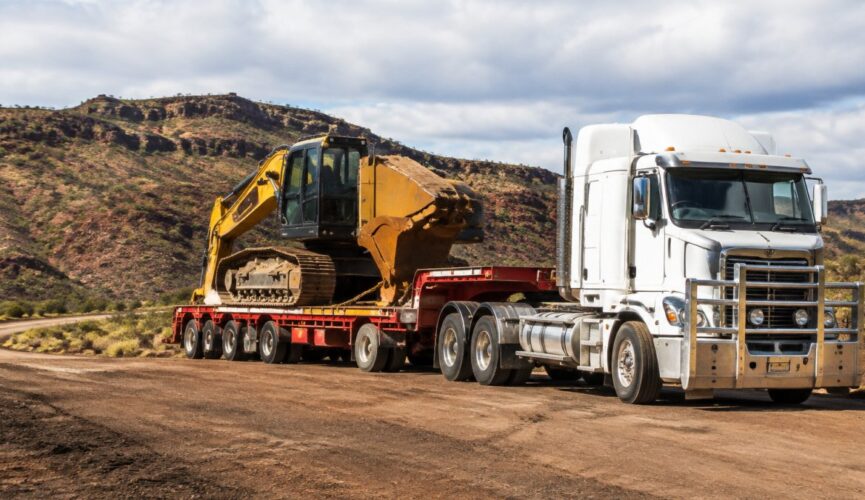
Last Updated: November 14, 2026
Quick Summary
Transporting heavy machinery to remote sites starts with measuring the machine’s height, width, length and weight and comparing them against site access points. Get permits for oversize loads early, since road authorities can take time to approve them. Prepare the machine and confirm access requirements in writing before booking.
- Record the machine’s height, width, length and weight before comparing them with site access.
- Oversize loads usually need permits from state or territory road authorities.
- Ask quotes to show vehicle configuration, route and permit costs separately.
- Drain fuel to the transporter’s requested level and remove loose attachments before loading.
- Photograph the machine from each side to record its condition at loading.
Table of Contents
- Planning Heavy Machinery Transport to Remote Sites
- Getting a Machinery Transport Quote and Securing Permits
- Preparing Your Machinery for Delivery and Booking Your Transport
- Frequently Asked Questions
Transporting heavy machinery to remote sites in Australia is rarely a simple truck booking. Dusty tracks, weight limits, oversize permits and tight delivery windows can all stall a project before the machine arrives. Load Up moves plant, farm machinery and heavy equipment across the country, and the planning you do before the truck leaves makes the difference. Our guide on how to book interstate heavy machinery transport walks you through the booking steps. This guide covers the steps that matter most when transporting heavy machinery to remote sites.
Planning Heavy Machinery Transport to Remote Sites
Start by measuring the machine and the route together, because transporting heavy machinery to remote sites depends on access. Record the machine’s overall height, width, length and weight, then compare those figures against the access points at the site. Remote tracks often have narrow crossings, low clearances and soft shoulders that a standard low-loader cannot manage.
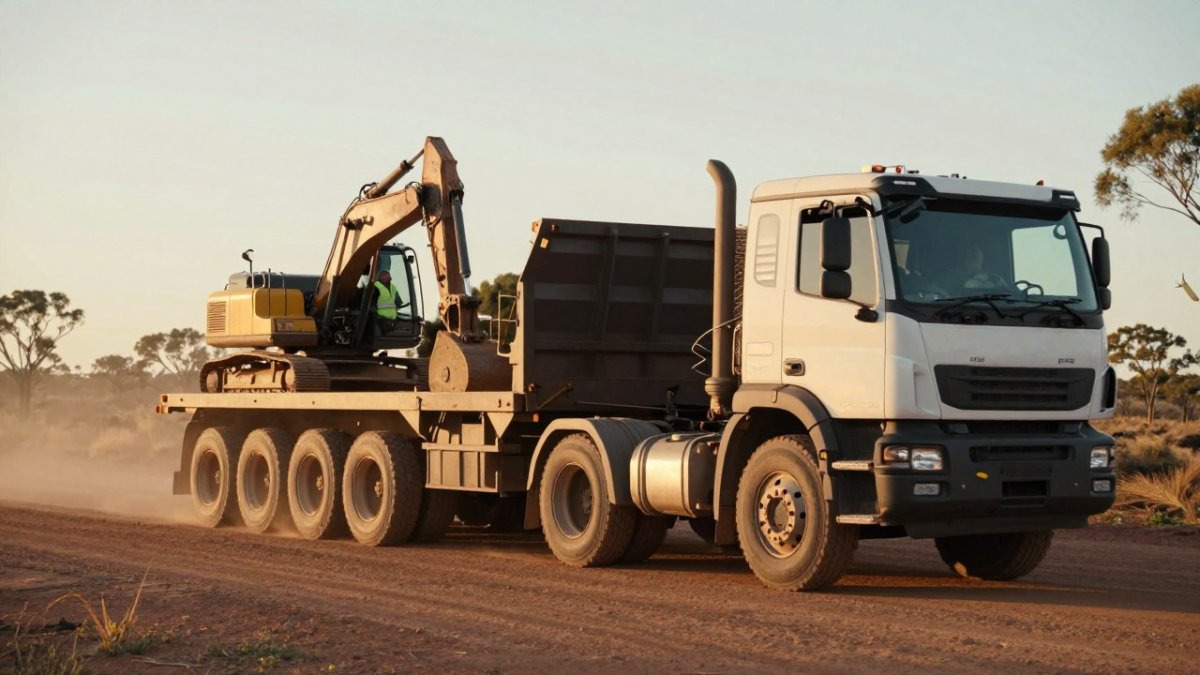
Watch out: an unmeasured access gate is the most common reason a delivery turns around at the site entrance.
Before booking, measure the machine and compare its dimensions against the site access points.
| Measurement | What to record | Why it matters |
|---|---|---|
| Overall height | Machine height | Checks low clearances |
| Width | Machine width | Checks narrow crossings |
| Length | Machine length | Checks turning space |
| Weight | Machine weight | Checks soft shoulders and load limits |
Getting a Machinery Transport Quote and Securing Permits
Ask for a quote that states the vehicle configuration, the route and any permit costs separately, so you can compare providers fairly when transporting heavy machinery to remote sites. Before requesting quotes, read how to choose a suitable heavy equipment mover to shortlist providers. Oversize loads usually need permits from the state or territory road authorities, and those can take time to approve. Build that lead time into your schedule before you confirm a delivery date.
Pricing depends on the machine’s size, the distance, the route and the delivery window, so request a quote from Load Up for current figures rather than relying on general estimates. You can also review our interstate freight services for machinery and vehicles before you ask for a quote.
Preparing Your Machinery for Delivery and Booking Your Transport
Prepare the machine before the driver arrives. Drain the fuel to the level the transporter requests, remove loose attachments, and confirm the battery and hydraulics are secure. Photograph the machine from each side so you have a record of its condition at loading. Our interstate caravan transport costs, timing and checklist covers more planning detail for interstate moves.
When you are ready to book, confirm the pickup point, the delivery contact and the site access requirements in writing. Load Up runs weekly service routes connecting Darwin, Perth, Adelaide, Brisbane and Melbourne, so tell us your dates early.
Frequently Asked Questions
How do you transport heavy machinery to a remote site?
Start by confirming the machine’s dimensions, weight and configuration, then check site access and the route from the nearest sealed road. Choose a suitable trailer or truck for the load, confirm any oversize permits needed for the route, and agree on a delivery window with the site contact. Confirm how the machine will be unloaded at the site, including whether lifting equipment or a level staging area is required. Ask your transport provider for a route survey where access is uncertain. Booking early gives more options for routing and scheduling around weather and road conditions.
What information is needed for a machinery transport quote?
A transport provider will usually need the make, model and weight of each machine, its length, width and height, and whether it can be dismantled. Include the pickup and delivery addresses, site access details, and the preferred delivery date. Note any unloading or lifting requirements and whether the site has restricted access hours. Giving complete details up front lets the provider price the job accurately and avoids delays or additional charges later. Pricing depends on load size, distance, route and timing, so request a quote from Load Up for current rates.
What permits are needed to move oversized machinery?
Oversize and over-mass loads generally require a permit from the relevant state or territory road authority, particularly when the load exceeds standard legal width, height, length or mass limits. Permit requirements vary by state, route and load dimensions, and some routes may need escort vehicles or travel restrictions. Your transport provider can usually advise on which permits apply and arrange them as part of the booking. Allow enough lead time, as permit processing can take days, and confirm that all approvals are in place before the transport date.

