
Last Updated: November 6, 2026
Quick Summary
The best interstate heavy equipment movers are those that match your machine type, plan the trailer and permits in writing, and give itemised quotes. Score each mover on equipment experience, trailer fit, permits, insurance and tracking, using the same load profile for all.
- Record machine type, dimensions with attachments, weight and access limits before contacting any mover.
- Score every mover on the same criteria using a simple 1 to 5 scale.
- Ask for quotes itemised into freight, loading, permits and insurance, not just a total.
- Confirm in writing who arranges and pays for oversize permits before the job starts.
- Declare the machine’s replacement value to insurers, since under-declaring leaves you exposed.
Table of Contents
- What Interstate Heavy Equipment Movers Actually Handle
- How to Compare Interstate Movers Side by Side
- Heavy Equipment Transport Cost: What Shapes the Price
- How Long Interstate Machinery Transport Takes, Route by Route
- Preparing Machinery for Transport and Requesting Your Quote
- Booking Your Interstate Equipment Move With Load Up
- Frequently Asked Questions
What Interstate Heavy Equipment Movers Actually Handle
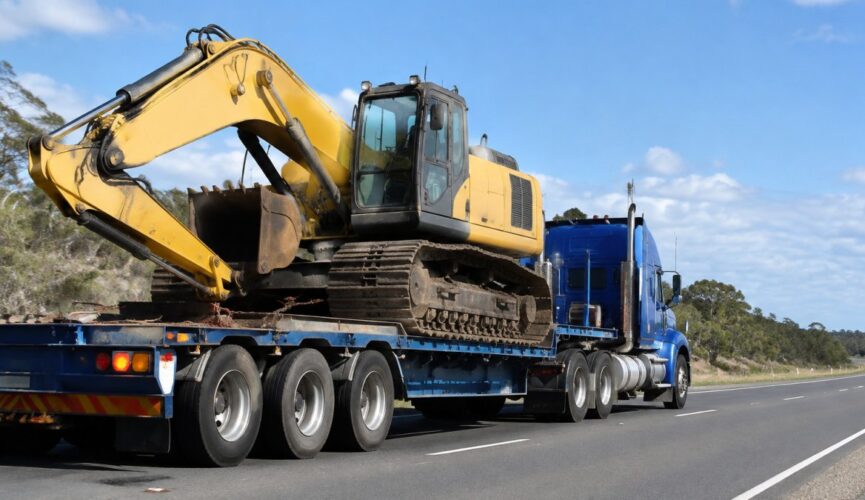
Interstate heavy equipment movers carry machinery between states, usually on a low-loader trailer, and the work is more specialised than a standard removalist job. A good mover plans the load before the truck arrives. Australian Government National Heavy Vehicle Regulator guidance on heavy vehicle loads sets out the rules that apply to heavy and oversize loads on Australian roads.
At Load Up, we move boats, caravans, farm machinery and heavy equipment across Australia, with weekly service routes connecting Darwin, Perth, Adelaide, Brisbane and Melbourne. The sections below explain what that work involves, so you can judge whether a mover is a good fit for your machine.
Excavators, loaders, tractors and forklifts
Each machine type brings its own handling issues. Tracked excavators need to be transported on a trailer with a suitable deck and ramp angle. Wheeled loaders and tractors are usually driven or winched on, and their tyres and hydraulics need checking before loading. Forklifts are heavy for their footprint and often need a crane or forklift to load.
A common mistake is assuming all heavy machinery is handled the same way. The attachments, counterweights and mast height change how a machine is secured. Tell your mover exactly what you are shipping, including any bucket, blade or attachment still fitted.
Load Up handles farm machinery and heavy equipment as part of its interstate service, so confirm the specific machine type when you request a quote. You can see real examples on the farm machinery transport service page.
Oversized loads, wide loads and load dimensions
Many heavy machines exceed standard road limits for width, height or length. Once a load is over those limits, it becomes an oversize or over-mass load and may need a permit. Pilot vehicles, route restrictions and travel-time limits can apply.
Measure the machine with any attachments fitted. Your mover needs the overall height, width, length and weight to plan a legal route. Permit responsibility depends on the operator and the load, so ask your mover in writing who arranges and pays for permits before the job starts.
How to Compare Interstate Movers Side by Side
Most interstate heavy equipment mover listings are service pages or quote platforms, so the comparison work falls to you.
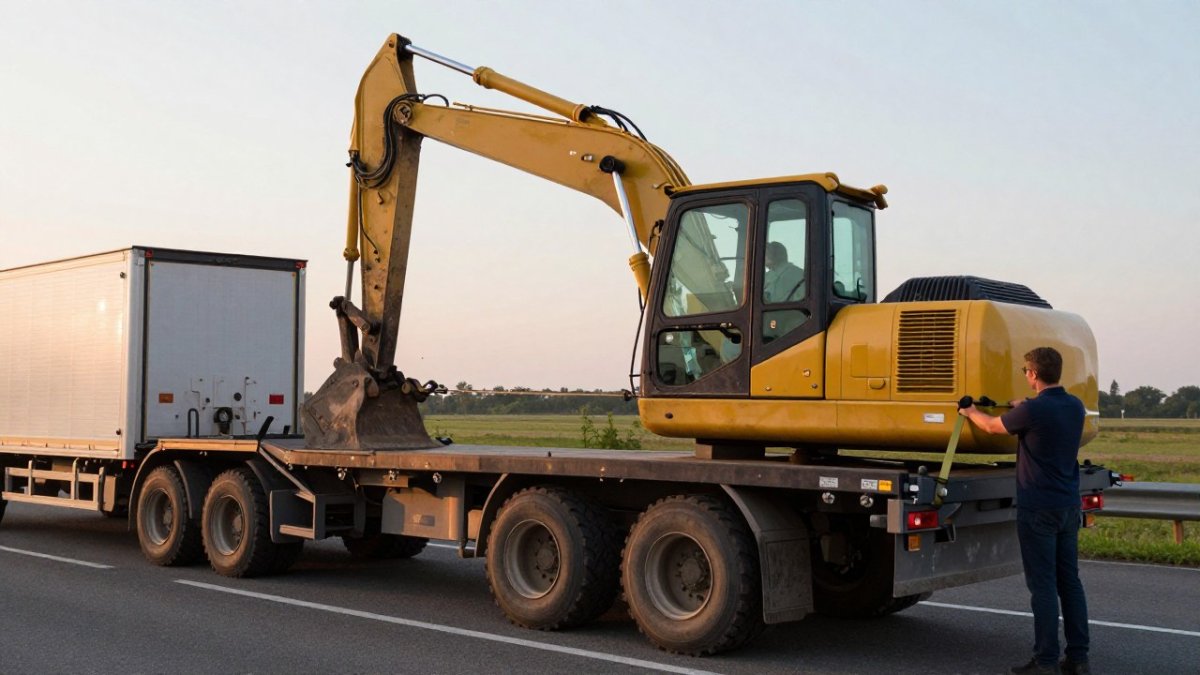
Step 2: Score each mover on these criteria. Use a simple 1-5 scale and note the evidence behind each score.
- Equipment experience: Has the mover moved your machine type before, and can it describe how it secures that machine? A specific answer beats a general claim.
- Trailer fit: Does it have a low-loader or float that suits your load’s height and weight, and can it explain the ramp angle or deck height? Ask for the trailer type in writing.
- Permits and compliance: Who arranges oversize permits, who pays, and who is responsible for route assessment and any escorts? Get the answer in the quote, not in conversation.
- Insurance and claims: What transit cover applies, what is excluded, and what is the claims process if the machine is damaged? Ask for the declared-value basis and the excess.
- Tracking and communication: Can you see where the load is during transit, who is your contact, and how are delays communicated?
- Route coverage: Does the mover run your specific origin and destination, or will it subcontract? If it subcontracts, ask who carries the liability.
- Loading and unloading: Is loading equipment included, and who supplies it at each end?
Step 3: Weigh the criteria for your load. A non-running machine with no ramp makes loading and unloading the deciding factor. An oversize machine makes permits and route assessment the deciding factor.
Step 4: Compare itemised quotes, not totals. Ask each mover to break the quote into freight, loading, permits and escorts, and insurance.
Watch out: A quote that leaves out permits, escorts or loading equipment often costs more once those items are added later.
The steps below set out how to compare interstate movers, with the timing or frequency to expect at each step.
| Step | What to do | Time or frequency |
|---|---|---|
| Define your load profile | Record machine type, dimensions with attachments, weight and access limits | Before contacting any mover |
| Score each mover | Rate each criterion 1-5 and note the evidence | Same criteria for every mover |
| Weigh the criteria | Decide weighting for your load before quotes arrive | Before quotes arrive |
| Compare itemised quotes | Break quotes into freight, loading, permits and insurance | Per quote received |
| Check the paperwork | Confirm windows, cancellation, insurance and permit terms in the contract | Before booking |
Heavy Equipment Transport Cost: What Shapes the Price
Heavy equipment transport pricing is not a single rate per kilometre.
Distance and route. Interstate runs are priced on kilometres travelled, but the route matters as much as the distance.
Weight and dimensions. Mass and footprint drive trailer selection.
Get in touch to make a booking or arrange a quote. →
Permits and escorts. Oversize loads may need a permit, and some movements need pilot or escort vehicles.
Loading and unloading. If the machine can be driven or winched on and off, loading is straightforward.
Insurance and declared value. Transit cover is usually priced against the declared value of the machine.
Backloading. Some movers discount a load that fills space on a truck already returning from a delivery.
Seasonality and scheduling. Farm machinery moves cluster around harvest and planting windows, and demand for heavy trailers rises at those times.
Pricing depends on the machine, the route and the dates, so request a quote through Load Up for a figure tied to your load.
How Long Interstate Machinery Transport Takes, Route by Route
Transit time depends on the route, the load and the permit conditions. Oversize loads often travel slower than standard freight and may be restricted to daylight hours or specific roads.
Load Up runs weekly service routes connecting Darwin, Perth, Adelaide, Brisbane and Melbourne. Ask for a delivery window, not a fixed date, because permit approvals and route restrictions can shift the schedule. To see how a heavy haulage load’s progress can be followed in transit, read how to track interstate heavy haulage loads. Confirm how the mover communicates delays before you book.
Preparing Machinery for Transport and Requesting Your Quote
Good preparation prevents delays and damage. Before the truck arrives, clean the machine so any leaks, mud or loose parts are visible. Drain or secure fuel where your mover requires it, and remove or secure loose attachments.
Have these details ready when you request a quote:
- Machine make, model and year
- Overall length, width and height, including attachments
- Weight, with attachments
- Pickup and delivery addresses
- Preferred dates and flexibility
- Any loading access limits at either site
Load Up can quote interstate transport for farm machinery and heavy equipment. Our page shows the trailer and equipment we use for transport jobs.
Booking Your Interstate Equipment Move With Load Up
Booking starts with a quote. Send the details from the checklist above, confirm the route and dates, and agree on who handles permits and insurance before you pay a deposit.
If you are moving farm machinery across state lines, read how oversized farm machinery transport permits work before you book, so you know what to expect from the permit process. Once you have a quote, you can book your interstate transport through Load Up’s transport service.
Frequently Asked Questions
How do I choose an interstate heavy equipment mover?
Start by confirming the provider has trailers rated for your equipment’s weight and dimensions, and that it covers your origin and destination routes. Ask whether it handles oversized permits, how it secures loads, and what insurance applies in transit. Request a written quote that lists the load dimensions, weight and pickup window. Check whether the company can give a delivery timeframe and tell you how you will receive updates while the machinery is on the road. A provider that asks detailed questions before quoting is usually more reliable than one that gives a price over the phone without seeing the load.
What information should I include when requesting a machinery transport quote?
Include the make, model and year of each machine, its weight, length, width and height, and whether it runs or needs to be winched. List the pickup and delivery addresses, including site access restrictions, and your preferred date range. Mention whether the machinery is in a remote area, whether you need loading assistance, and whether you require a specialised trailer. Accurate measurements prevent re-quoting once the carrier sees the load. Having this information ready also makes it easier to compare quotes on a like-for-like basis.
How long does interstate machinery transport take?
Transit time depends on the distance between cities, the trailer type, permit requirements and the carrier’s scheduled routes. Many carriers run set weekly services on major interstate corridors, so a pickup may be booked for a specific day rather than a precise hour. Oversized loads can take longer because they may need travel restrictions, escort vehicles or approval for specific routes. Ask the provider for an estimated delivery window in writing, and confirm what happens if a delay occurs.
What should I check before booking an equipment transport company?
Confirm that the company holds current insurance covering your equipment in transit, and ask how claims are handled if damage occurs. Check that it has experience with your machinery type and the permits needed for oversized loads. Ask how loads are secured and whether drivers are trained in load restraint. Request a clear statement of responsibilities for permits and route approvals. Finally, ask how you can track the load and who your contact is during the move.
Moving heavy equipment interstate is a planning job first and a driving job second. Get the dimensions, weight and permit responsibilities right at the start, and the move is far more likely to run on time. Get in touch with Load Up to make a booking or arrange a quote.

