
Quick Summary
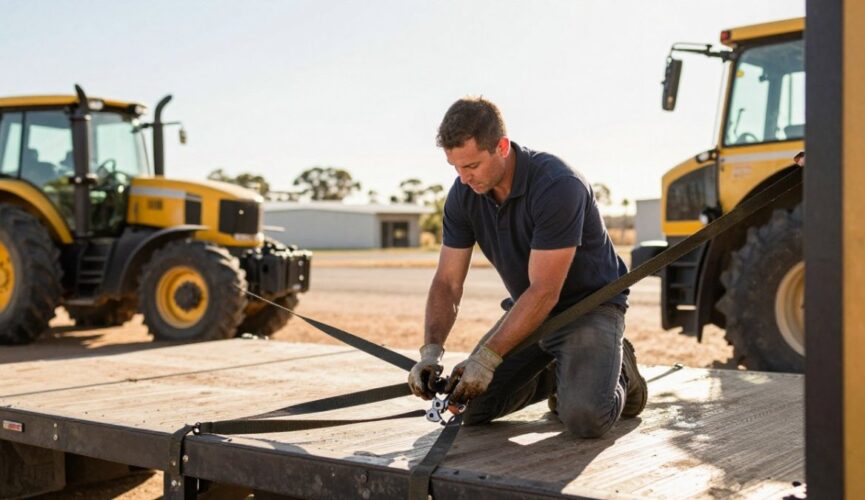
To secure heavy machinery for long transit, position the machine centred and balanced on the trailer, fit wheel chocks or wedges, then attach straps or chains only to designated tie-down points. Tension each restraint evenly, and recheck after the first few kilometres.
- Gather a trailer rated for the machine’s weight, plus straps or chains with a known working load limit.
- Attach restraints only to designated tie-down points on the trailer.
- Recheck tension after the first few kilometres, since long trips loosen straps.
- Protect edges where straps bend so they do not cut or weaken.
Table of Contents
- What You’ll Need Before Securing Heavy Machinery
- Step-by-Step Guide to Securing Heavy Machinery for Long Transit
- Load Restraint Inspection Checklist and Re-Tensioning on the Road
- Frequently Asked Questions
What You’ll Need Before Securing Heavy Machinery
Last Updated: November 17, 2026
Securing heavy machinery for long transit starts before the truck leaves the yard. Get the right gear and paperwork ready first, and the rest of the job goes faster. The same checks apply to every load.
Before you start, gather:
- A trailer rated for the machine’s weight, with clear tie-down points
- Ratchet straps or chains with a known working load limit
- Edge protectors, wheel chocks and wedges
- Your machine’s weight and dimensions in writing
Check each tie-down point is undamaged and rated for the load. For more on the wider process, read our Transporting Heavy Machinery to Remote Sites: A Step-by-Step Guide.
Step-by-Step Guide to Securing Heavy Machinery for Long Transit
Work through the load in order. A missed step early often causes the biggest problems later.
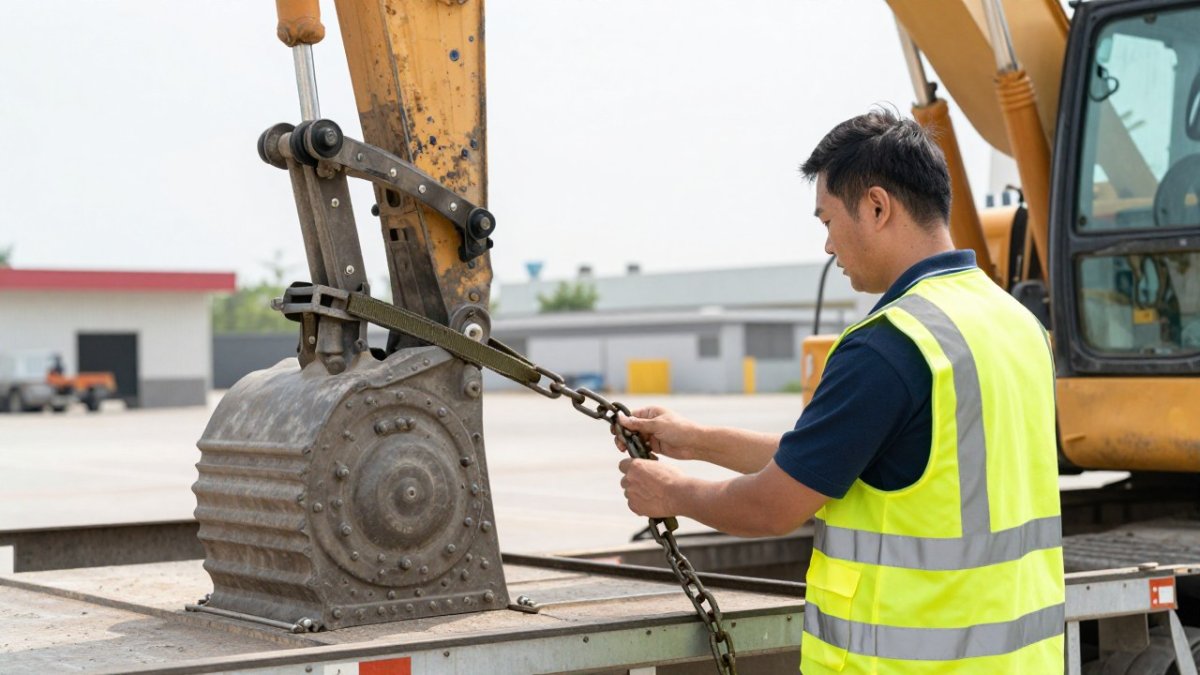
- Position the machine over the trailer’s centre line, with weight balanced.
- Fit wheel chocks or wedges to stop any movement.
- Attach straps or chains to designated tie-down points only.
- Tension each restraint evenly, then recheck after the first few kilometres.
- Protect edges where straps bend so they do not cut or weaken.
A load moved to Brisbane with a Volvo truck shows how this works in practice. See Load of Volvo Trucks to Brisbane for a secured long-haul example. A gold mining equipment run to Cooktown also follows the same order: A quick load to Cooktown.
A Seedoo jet ski and feeder load bound for Perth shows how movable parts get secured too: Seedoo Jet ski and a Load of hay feeders on the way to perth.
The steps below follow the order the article recommends for securing the load.
| Step | What to do | Timing |
|---|---|---|
| 1. Position the machine | Centre it over the trailer, weight balanced | Before anything else |
| 2. Fit chocks or wedges | Stop any movement | Before strapping |
| 3. Attach straps or chains | Use designated tie-down points only | Before departure |
| 4. Tension restraints | Tension evenly | Recheck after first few kilometres |
| 5. Protect edges | Stop straps being cut or weakened | Where straps bend |
Load Restraint Inspection Checklist and Re-Tensioning on the Road
Long trips loosen straps, so inspect the load regularly. Stop regularly during the trip, including at each fuel or rest break.
- Straps are still tight and undamaged
- Chocks and wedges have not shifted
- Machine has not moved on the trailer
- Re-tension any slack restraints
Interstate hauls carry extra risk, so review our Interstate Boat Transport Safety: Essential Tips before you leave. The National Transport Commission publishes a load restraint guide that sets the national rules for securing loads on Australian roads.
Frequently Asked Questions
What are the NTC load restraint requirements for heavy machinery?
The National Transport Commission’s Load Restraint Guide sets out how heavy loads must be secured on Australian roads. It requires that restraints are rated to the correct working load limit, that tie-down points on the machine are used, and that the total restraint capacity meets the minimum required for the load’s weight and the acceleration, braking and cornering forces expected in transit. Operators should work from the current edition of the guide and the rules in their state or territory, because individual jurisdictions adopt and enforce these requirements in slightly different ways.
How often should load restraints be checked during long-distance transit?
Check restraints before departure, after the first short stretch of driving, and at every rest stop on a long trip. Re-tension straps and chains where needed, since loads can settle and webbing can stretch in the first hours of transit. Look for worn edges, damaged hooks, loose binders and any sign that the machine has shifted. Keep a record of each check, as it supports compliance and helps identify problems early.
Do I need different tie-downs for tracked versus wheeled machinery?
Yes. Tracked machines such as excavators and dozers usually need chains or straps anchored at the designated tie-down points on the frame or track frame, positioned to resist forward, rearward and sideways movement. Wheeled machines such as loaders and telehandlers need restraints at the chassis anchor points, with wheel chocks or wedges fitted to stop rolling. Always confirm the anchor points in the machine’s manual before loading.

