
Last Updated: November 28, 2026
Quick Summary
Before hiring professional heavy haulage services, check the provider’s licensing, insurance cover, equipment suitability, permit handling and communication process. Heavy haulage insurance should cover cargo in transit, not only third-party damage, so confirm the policy limit against your machine’s value. A good provider also manages permits and route planning rather than leaving you to chase council approvals.
- Heavy haulage moves loads that exceed standard truck dimensions or weights, including excavators, tractors, boats and caravans.
- Chain of responsibility laws under the Heavy Vehicle National Law apply to everyone in the supply chain, from loader to driver.
- The most common mistake is booking on price alone and finding the insurance excludes the cargo.
- A real quote covers distance and route, load weight and dimensions, permit requirements, access at both ends and equipment needed.
- Ask your provider who applies for permits and what happens if a route changes mid-journey.
Table of Contents
- What should you check before hiring professional heavy haulage services?
- Getting a heavy haulage quote that reflects the real job
- Heavy haulage permits and load compliance explained
- Frequently Asked Questions
What should you check before hiring professional heavy haulage services?
Before hiring professional heavy haulage services, check the provider’s licensing, insurance cover, equipment suitability, permit handling and communication process. These five checks separate operators who move heavy machinery safely from those who simply own a truck and a trailer.
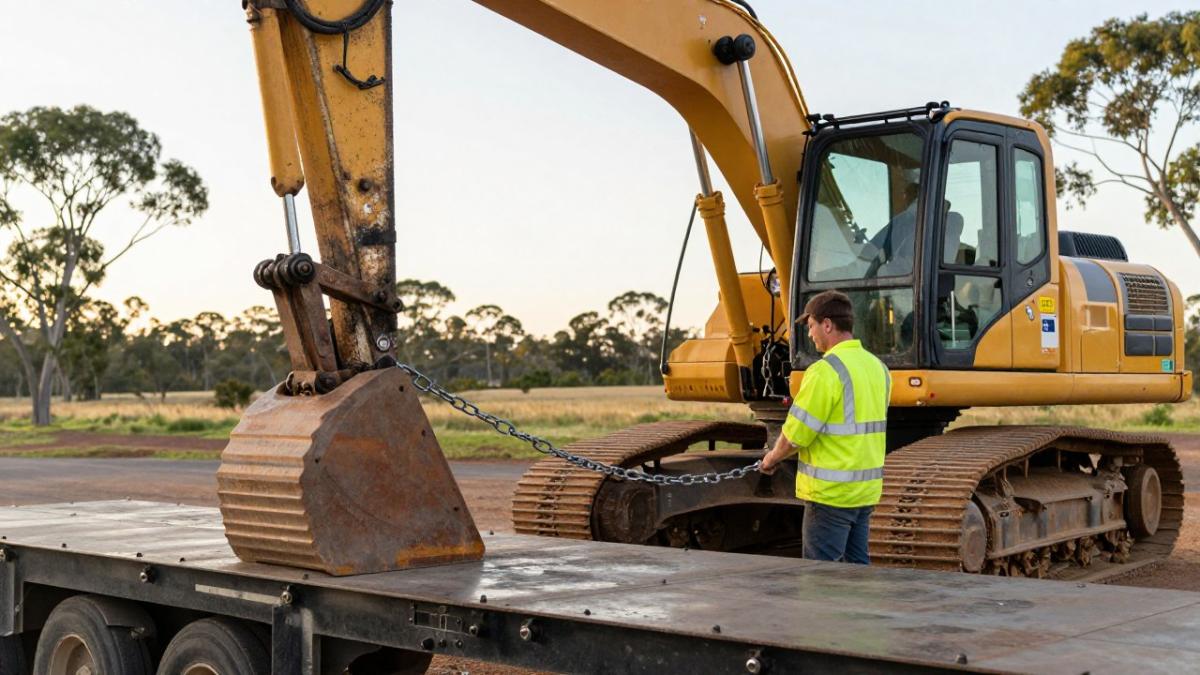
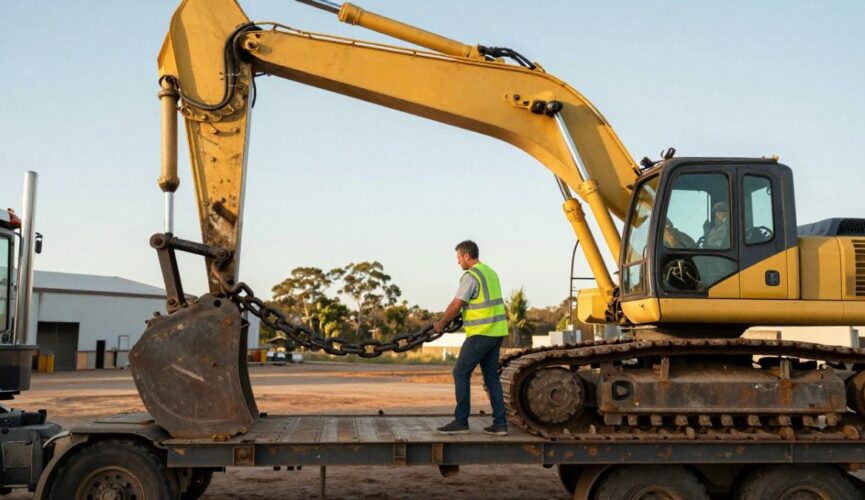
Heavy haulage is the movement of loads that exceed standard truck dimensions or weights, including excavators, tractors, boats and caravans. It is not general freight with a bigger trailer. Chain of responsibility laws under the Heavy Vehicle National Law apply to everyone in the supply chain, from the loader to the driver, and the National Heavy Vehicle Regulator’s guidance on chain of responsibility sets out what each party must do.
1. Licensing and accreditation. Ask for heavy vehicle registration and driver accreditation.
2. Insurance that covers the load, not just the truck. Heavy haulage insurance should cover cargo in transit, not only third-party damage. Confirm the policy limit against your machine’s value.
3. Equipment matched to the load. A tilt tray suits a small excavator; a bogie truck, semi tipper or truck and dog suits bulk cartage; road trains suit remote regional runs. If one trailer type covers everything, keep looking.
4. Permit handling. Oversize loads need permits and route planning. A good provider manages this rather than leaving you to chase council approvals.
5. Communication and tracking. You should know when your equipment is moving and when it will arrive.
Watch out: the most common mistake is booking on price alone and discovering the insurance excludes the cargo. That gap only surfaces after damage occurs.
If you want to see what a full heavy haulage service offering looks like before you commit, review the interstate tractor transport options available and match them against your load.
Here are the five checks the article recommends before booking a heavy haulage provider.
| Check | What to confirm |
|---|---|
| Licensing and accreditation | Heavy vehicle registration and driver accreditation |
| Insurance | Cargo in transit covered; policy limit matches machine value |
| Equipment | Trailer type matched to the load, not one-size-fits-all |
| Permit handling | Provider manages permits and route planning for you |
| Communication and tracking | You know when equipment is moving and arriving |
Getting a heavy haulage quote that reflects the real job
A heavy haulage quote is only useful if it prices the actual job. Most quote disputes trace back to details never discussed at the start.
A real quote covers distance and route, load weight and dimensions, permit requirements, access at both ends, and equipment needed. An oversize load requiring pilot vehicles and a longer route costs more than one fitting a standard float.
Quoting from a photo can hide weight, and weight affects trailer choice and permit class. Give real figures so the quote reflects the job.
Machinery relocation carries risks affecting scope and cost, from route restrictions to load securement. Our guide to managing interstate machinery relocation risks safely covers them in detail.
Pricing depends on distance, quantity, dates and delivery. For current prices or a quote, get in touch with Load Up.
Heavy haulage permits and load compliance explained
Heavy haulage permits are the approvals that let an oversize or overmass vehicle travel on public roads. The National Heavy Vehicle Regulator’s permit system issues these approvals, and requirements vary by load class and route.
Load compliance covers more than permits: correct load restraint, accurate mass declaration and route adherence. A load legal on one road may be restricted on a bridge or in a council area.
Ask your provider who applies for the permits and what happens if a route changes mid-journey. The answer tells you whether they do this regularly.
Moving heavy equipment to remote or difficult sites adds another layer, including access roads and unloading space. Our article on how to move heavy equipment to remote sites walks through the practical steps.
Heavy equipment moves go wrong when the groundwork is skipped, not when the truck is wrong. Load Up handles boats, caravans, farm machinery and heavy equipment with weekly service routes connecting Darwin, Perth, Adelaide, Brisbane and Melbourne. We manage the permits, match the trailer to the load, and keep you informed while your asset is on the road. Get in touch with Load Up to make a booking or arrange a quote and move your machinery with confidence.
Frequently Asked Questions
How do I choose the right heavy haulage service for my load?
Match the provider to your load type and route first. Ask whether they run regular services on your corridor, whether their fleet includes the trailer type your load needs, and how they handle permits for oversize items. Check that drivers are trained for heavy vehicle operation and that the provider carries adequate heavy haulage insurance. A short phone call about your specific boat, caravan or machine will quickly show whether they understand the job.
What information do I need to get a heavy haulage quote?
Give the provider dimensions, weight, pickup and delivery locations, and your preferred dates. For machinery, note whether it runs and whether it needs loading equipment on site. For boats and caravans, include overall length and height. Mention any access limits at either end, such as narrow driveways or low trees. The more detail you supply, the more accurate the heavy haulage quote, and the fewer surprises on the day.
Does heavy haulage require permits or an escort vehicle?
Oversize and overmass loads generally need permits, and some movements also require escort vehicles depending on the load’s dimensions and the route. Requirements vary by state and road authority, so confirm who is arranging approvals before you book. Ask your provider who manages heavy haulage permits and whether your load triggers escort conditions.

