
Last Updated: November 25, 2026
Quick Summary
Moving heavy equipment to remote sites means planning the load, route, access and paperwork before anything is loaded, then using a carrier with the right trailer and permits. A worksite access assessment inspects roads, gates, ground and turning space at both ends of a move before a carrier quotes or books the job.
- Measure the narrowest gate, tightest corner and load-bearing surface of tracks and culverts before booking.
- Add trailer deck height to machine height to decide which bridges and overhead lines the load can pass.
- A machinery transport quote should list dimensions, addresses, dates, trailer type, permit responsibility and exclusions.
- Secure the machine with rated chains or straps at the manufacturer’s tie-down points and recheck after the first stop.
- Load Up runs weekly service routes connecting Darwin, Perth, Adelaide, Brisbane and Melbourne.
Table of Contents
- How do you move heavy equipment to remote sites?
- Worksite access assessment before you book
- Heavy haulage route planning and permits
- What should a machinery transport quote include?
- Heavy equipment loading and unloading
- How do you move heavy equipment to remote sites?
- How do you move heavy equipment to remote sites safely?
- Plan the move before the machine moves
- Frequently Asked Questions
How do you move heavy equipment to remote sites?
Moving heavy equipment to remote sites means planning the load, route, access and paperwork before anything is loaded, then using a carrier with the right trailer and permits. Remote sites punish guesswork: a machine that fits a standard drop-deck trailer in a metro yard can stall a project for a week once the last stretch is unsealed road or a gate too narrow for the float.
Worksite access assessment before you book
A worksite access assessment inspects roads, gates, ground and turning space at both ends of a move, done before a carrier quotes or books the job.
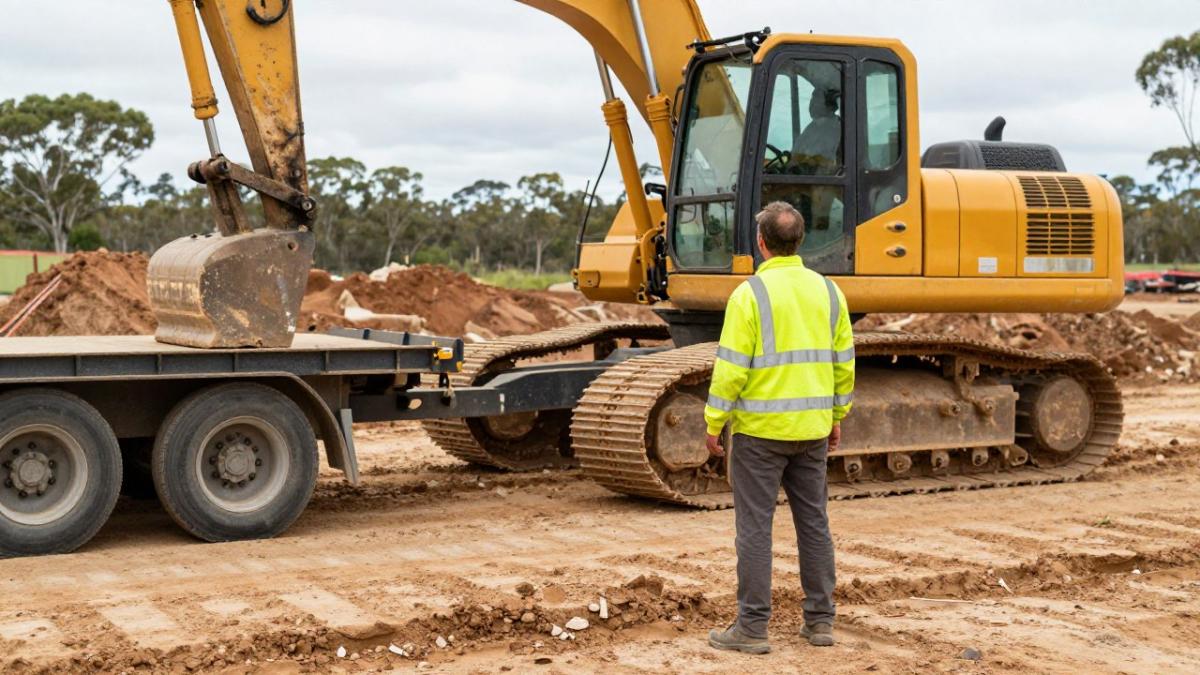
Measure the narrowest gate, tightest corner and load-bearing surface of any track or culvert, and note overhead lines, tree canopy and weight limits.
The access assessment checks the details at both ends of the move before a carrier quotes or books the job.
| Item to check | What to record |
|---|---|
| Gates | Narrowest gate width |
| Corners | Tightest corner |
| Ground | Load-bearing surface of tracks and culverts |
| Overhead | Overhead lines and tree canopy |
| Limits | Weight limits |
| Unloading | Whether a hard stand exists |
| Turning | Room to turn a B-double |
| Site access | Who opens gates and signs off |
Heavy haulage route planning and permits
Heavy haulage route planning is the process of choosing a legal, practical path for an oversized load, including bridge assessments, pilot vehicles and the permits each state or territory requires. It is the part of a heavy equipment move that most often causes delays.
Each state and territory runs its own heavy vehicle access rules and permit systems.
Record the length, width, height and weight of the machine as it will sit on the trailer, adding the trailer deck height to the machine height, that number decides which bridges, tunnels and overhead lines the load can pass.
What should a machinery transport quote include?
A machinery transport quote should list equipment dimensions, pickup and delivery addresses, dates, trailer type, permit responsibility and exclusions. A quote that looks cheap often excludes permits, pilot vehicles or waiting time, so ask what happens if the truck is held up at site for half a day.
Pricing depends on distance, load size, permits, access difficulty and dates, so get a quote for your specific load.
Heavy equipment loading and unloading
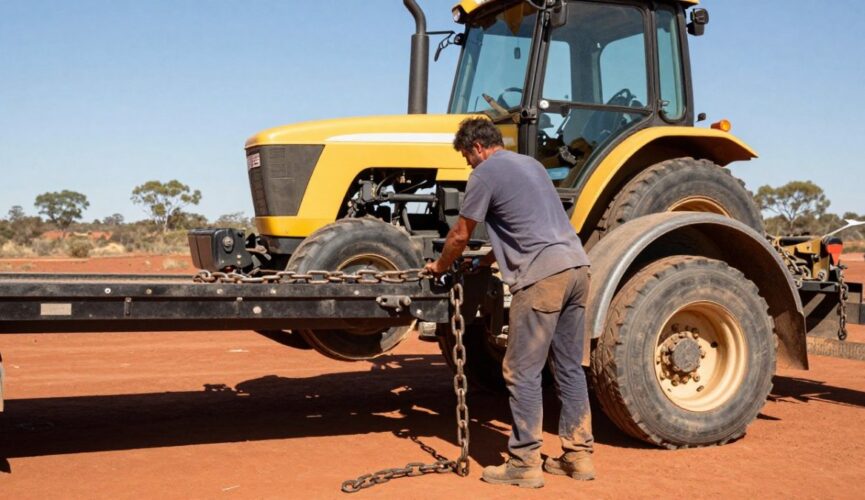
Loading and unloading is where most transit damage happens. Secure the machine to the deck with rated chains or straps at the manufacturer’s tie-down points, apply the parking brake, and recheck the load after the first stop.
Match the trailer to the machine: a small excavator may travel on a tag trailer, while a large loader or dozer needs a float or low-loader with the right deck rating. Use ramps rated for the load, keep the deck clean, and have a spotter guide an experienced operator.
How do you move heavy equipment to remote sites?
Engage a carrier that runs regular routes, confirm access and permits in writing, and book early. Interstate freight services for vehicles, boats, machinery and auction pickups let you see the service and get a quote for your load.
Load Up runs weekly service routes connecting Darwin, Perth, Adelaide, Brisbane and Melbourne, and handles boats, caravans and farm machinery. see the interstate freight services for vehicles, boats, machinery and auction pickups and get a quote for your load.
For a deeper walkthrough of oversized moves, read our guide to planning oversized load logistics step by step. And to understand the risks before you book, see managing interstate machinery relocation risks safely.
How do you move heavy equipment to remote sites safely?
Safety on a remote move comes down to a load that cannot shift, a route that has been checked, and a plan for delays. Confirm the carrier’s insurance and chain of responsibility arrangements before the machine leaves the yard.
Put in writing who is responsible at each stage, loading, transit, unloading and site handover, so a damage claim or slipped window has a clear process. Ask whether you can get progress updates and an estimated arrival time, so the site contact and unloading equipment are ready when the truck arrives.
Plan the move before the machine moves
Remote heavy equipment moves fail on the details: a gate measured wrong, a permit nobody arranged, a machine loaded in a hurry. Get the access assessment, route planning and quote inclusions right and the transport becomes the easy part.
Load Up moves boats, caravans and farm machinery on weekly routes to Darwin, Perth, Adelaide, Brisbane and Melbourne, with options for both local and heavy interstate transport.
Get started with Load Up and move your machinery to site with a plan in place before the truck arrives.
Frequently Asked Questions
How far in advance should remote-site machinery transport be booked?
Book as early as possible, especially for remote sites where access is limited and permits may be needed. Allow extra time for a worksite access assessment and any oversized-load approvals before your preferred date. Load Up runs weekly service routes to Darwin, Perth, Adelaide, Brisbane and Melbourne, so confirming your slot early gives more flexibility if route or permit issues arise. Last-minute bookings can still be quoted, but you may face tighter scheduling.
What information is needed to arrange heavy machinery transport?
You will need the equipment type, dimensions, weight, and any attachments, plus pickup and delivery addresses with access details. Note ground conditions, gate widths, overhead obstructions and whether a crane or ramps are required for loading and unloading. For a machinery transport quote, include your preferred dates, whether the load is oversized, and any site induction or permit requirements. Clear photos of the equipment and access points help the carrier plan accurately and avoid surprises on the day.
What can delay a heavy equipment delivery to a remote site?
Common delays include unplanned road closures, wet weather making access tracks impassable, missing or late permits for oversized loads, and site inductions that were not arranged in advance. Loading can also stall if the equipment will not start or the ground is too soft for the truck. Build buffer time into your schedule, confirm access conditions a few days before pickup, and have a contact on site who can meet the driver and direct unloading.

