
Last Updated: November 19, 2026
Quick Summary
Heavy equipment transport insurance protects machinery while it is being moved, from loading until unloading at its destination, covering physical damage, theft and loss in transit. It is separate from the carrier’s own liability, and the gap between the two is where most claims disputes start.
- Cargo-in-transit cover protects the goods regardless of fault, while carrier liability depends on the carrier’s terms and fault.
- Carrier liability is capped by the carrier’s terms, so ask for the liability cap in writing before booking.
- Most cargo policies exclude wear, tear and pre-existing damage, and many exclude consequential loss unless added.
- Photograph the machine from all four sides, plus tie-down points and attachments, at pick-up.
- Never sign a clean delivery docket before a walk-around inspection; note any damage in writing first.
Table of Contents
- What Heavy Equipment Transport Insurance Covers
- Cargo-in-Transit Cover Versus the Carrier’s Liability
- Coverage Timeline and Handoff Points
- Equipment Transport Insurance Exclusions to Check
- Oversize Loads and Specialist Transport Considerations
- How Premiums and Insured Values Are Set
- Getting a Machinery Transport Insurance Quote
- Making a Heavy Equipment Insurance Claim
- Booking Your Next Interstate Equipment Move With Load Up
- Frequently Asked Questions
Heavy equipment transport insurance is the cover that protects machinery while it is being moved, from the moment it is loaded until it is unloaded at its destination. For anyone shifting an excavator, a boat, a caravan or farm machinery between states, the policy you hold and the carrier’s own liability are two different things, and the gap between them is where most claims disputes start. Load Up moves boats, caravans, farm machinery and heavy equipment, and the questions below are the ones our customers ask before they book.
What Heavy Equipment Transport Insurance Covers
Heavy equipment transport insurance pays to repair or replace your machinery if it is damaged, stolen or lost while in transit. It is separate from the insurance you hold for the machine when it sits in your yard or runs on a job site, and that distinction matters when a load is in the hands of a third party.
Physical damage, theft and loss in transit
Physical damage covers impact, collision, tipping, water exposure and damage from poor tie-down during the trip. Theft and loss cover items taken from the load or lost when a trailer is unhitched at a depot. Read the wording closely, because some policies only respond to damage caused by an accident, not damage from a load shifting on a bumpy road.
Owned, leased and hired equipment
Who holds the title changes who must be insured. Owned equipment is usually covered under your own policy. Leased equipment often requires the lessor to be noted on the policy, and the lease agreement may set minimum cover levels. Hired equipment, where you rent a machine for a short job, is commonly insured by the hire company, but you may still be liable for damage caused while it is in your care. Check the hire agreement before the machine leaves the yard.
Cargo-in-Transit Cover Versus the Carrier’s Liability
This is the single most misunderstood part of equipment transport, and it is where most disputes begin. Cargo-in-transit cover is an insurance policy taken out by you or the equipment owner to protect the goods themselves. The carrier’s liability is the legal responsibility the transport company accepts for loss or damage it causes. The two often overlap but are not the same, and one does not automatically fill the gaps in the other.
What the carrier is actually liable for
A carrier’s liability is not unlimited. The carrier’s liability is set by its own terms and conditions, which should be read before booking. Ask the carrier to state in writing what its liability cap is and whether a declared-value option is available.
That means a carrier can be legally liable for a loss and still pay only a fraction of what the machine is worth. The carrier’s liability responds to the carrier’s fault; cargo-in-transit cover responds to the value of the goods, regardless of who was at fault.
Where the two overlap and where they do not
A common pattern is for the carrier’s terms to exclude or limit liability for:
- damage caused by inadequate securing where the owner supplied the tie-downs or loading instructions
- wear, tear, and pre-existing condition
- consequential loss, such as hire costs while the machine is being repaired
- items left inside the machine, such as tools, fuel, or personal belongings
Cargo-in-transit cover can be written to respond to some of these, but not all. Most cargo policies still exclude wear and tear and pre-existing damage, and many exclude consequential loss unless it is specifically added. The practical result is that neither the carrier’s liability nor a basic cargo policy may cover the full loss on its own, which is why the two need to be read together before the machine leaves the yard.
Who should insure what
As a rule of thumb:
- The equipment owner should hold cargo-in-transit cover or confirm that an existing marine or inland transit policy extends to the move. The carrier’s liability is not a substitute for insuring the machine’s value.
- The carrier should hold public and products liability cover and, where it offers it, a declared-value cargo option. Ask for the certificate of currency and the liability cap in writing.
- The broker or insurer should be told the machine’s replacement value, the route, the transport method, and any oversize or specialist handling requirements, because these affect both the premium and whether a claim will be paid in full.
Watch out: a verbal assurance that a machine is “fully insured” is not a coverage statement. Only the written policy schedule and the carrier’s terms define what is paid, by whom, and to what limit.
How the two interact in a claim
In practice, a claim often runs on two tracks. The equipment owner claims on the cargo policy for the insured value, and the insurer may then seek to recover from the carrier to the extent the carrier was at fault and liable under its terms. That subrogation process is between the insurers and the carrier; the owner’s job is to document the loss and notify both parties promptly.
The two sources of protection differ in what triggers them and what they pay, as summarised below.
| Aspect | Cargo-in-transit cover | Carrier’s liability |
|---|---|---|
| Purpose | Protects the goods themselves | Legal responsibility for loss the carrier causes |
| Who holds it | Equipment owner, or existing transit policy | The transport company |
| What triggers payment | Value of the goods, regardless of fault | The carrier’s fault, within its terms |
| Limit | Insured value on the policy schedule | Liability cap set in the carrier’s terms |
| Typical exclusions | Wear, tear, pre-existing damage | Inadequate securing, consequential loss, items left inside |
| Action before booking | Confirm insured value and transit cover | Ask for the liability cap in writing |
Coverage Timeline and Handoff Points
Coverage can change hands several times on a single move. The most common handoff points are:
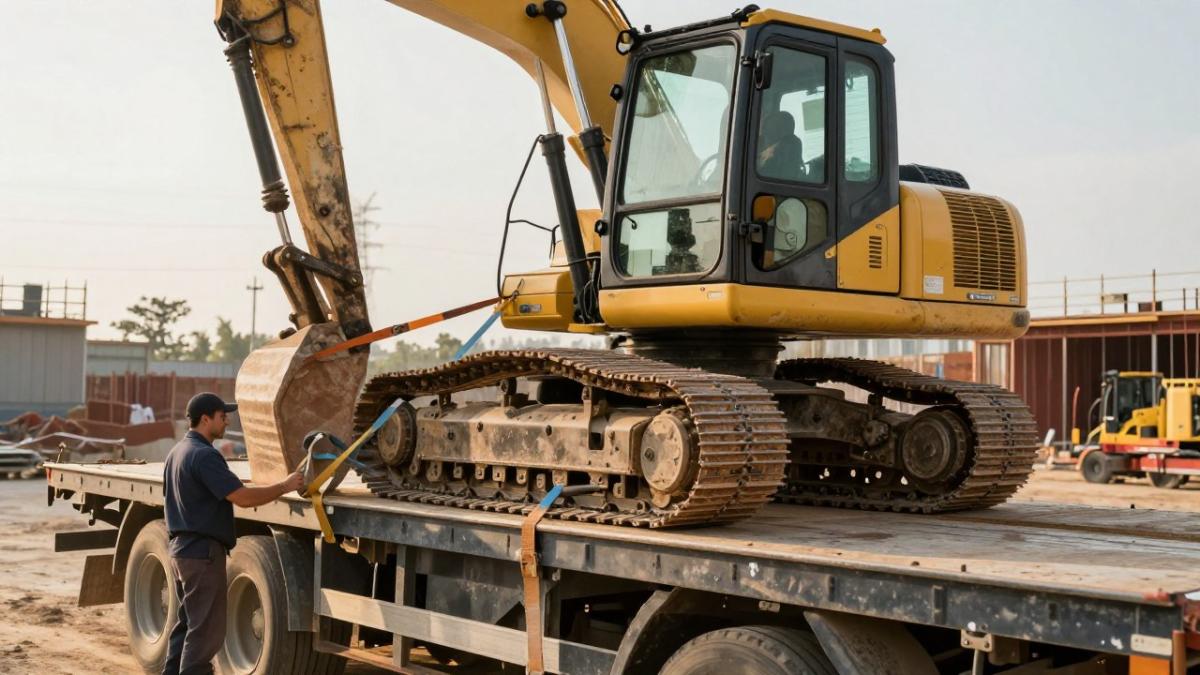
- Loading at origin: Your policy usually applies once the item leaves your property or enters the carrier’s care, but check whether loading damage is included.
- In transit: The carrier’s liability and any cargo cover run for the journey itself, including overnight stops at depots.
- Transfer between carriers: If a load is passed to a second transport operator, confirm each leg is covered. Gaps often appear at these points.
- Unloading at destination: Coverage typically ends once the goods are signed for. Inspect the machine on the spot and note any damage on the delivery docket before you sign.
A common mistake is signing a clean delivery docket without a walk-around inspection. Once the docket is signed, proving the damage happened in transit becomes much harder.
Watch out: Do not assume a verbal promise that a machine is “fully insured” covers you. Only the written policy and the transport terms define what is paid.
Equipment Transport Insurance Exclusions to Check
Exclusions are where claims are most often refused. Common ones include:
- Damage from inadequate or incorrect tie-down that the owner supplied
- Wear, tear, rust or existing damage that was not recorded at pick-up
- Mechanical or electrical breakdown unrelated to the transport event
- Items left inside a machine, such as tools, fuel or personal belongings
- Damage to fragile attachments or components not declared in the load description
Before booking, list every attachment, accessory and loose item on the load, and photograph the machine from all sides at pick-up. These two steps address most exclusion disputes.
Oversize Loads and Specialist Transport Considerations
Oversize and overmass loads carry extra risk and often extra paperwork. Machinery wider, taller or heavier than standard limits may require permits, escort vehicles and approved routes, and a policy that does not reflect those conditions may not respond in full.
If your load is oversize, tell both your insurer and the carrier before the booking is confirmed. Load Up handles interstate freight for vehicles, boats, machinery and auction pickups, and we can advise which load details need to be declared on your transport booking.
How Premiums and Insured Values Are Set
Premiums are driven mainly by three factors: the insured value of the equipment, the risk of the route and the level of cover you choose. A higher insured value costs more to cover, as does a route with longer distances, rougher roads or more overnight stops. Deductibles, which are the amount you pay before the insurer contributes, work in the other direction: a higher deductible usually lowers the premium.
Set the insured value at replacement cost, not the price you originally paid. Underinsurance is one of the most common reasons a claim pays less than the owner expects, because the insurer applies the sum insured to the loss proportionally.
Getting a Machinery Transport Insurance Quote
A quote is only as accurate as the information you give. Gather these details before you ask for one:
- Make, model, year and serial number of each machine
- Current replacement value, supported by a recent valuation or invoice
- Full description of attachments and loose items travelling with the load
- Pick-up and delivery addresses, and whether the route is interstate
- Preferred transit dates and any expected overnight stops
- Whether the equipment is owned, leased or hired
Pricing depends on quantity, dates and delivery, so contact Load Up for a quote. Our team can confirm the transport terms that apply to your specific load. You can also review the interstate boat transport insurance requirements to check what your own policy needs to cover before you book.
Making a Heavy Equipment Insurance Claim
Speed and evidence decide most claims, and the evidence you need depends on which policy is responding. A cargo-in-transit claim and a carrier-liability claim run on different timelines, different notice requirements, and different proof. The checklist below is built to serve both.
Before the move: the evidence that prevents disputes
Most claim disputes are won or lost before the machine is loaded. Assemble a pre-move file that includes:
- dated photographs of the machine from all four sides, plus close-ups of any existing damage, rust, or wear
- a written condition report signed by the owner and, where possible, the carrier at pick-up
- the load description, including every attachment, accessory, and loose item travelling with the machine
- the carrier’s terms and conditions, the liability cap, and any declared-value option in writing
- the cargo policy schedule and the insurer’s claims notification contact and time frame
A common pattern is for owners to photograph the machine but not the tie-down points or the attachments, which are exactly the areas where transit damage and exclusion disputes concentrate.
At delivery: what to do before you sign
Do not sign a clean delivery docket until you have walked around the machine and checked the load against the pre-move photographs. If you see damage:
- Note the damage on the delivery docket in writing before signing, or refuse to sign and record why.
- Photograph the damage from several angles, with a scale reference where possible, and photograph the tie-downs and the surrounding load.
- Keep the original docket, load sheets, and any carrier correspondence.
- Notify the carrier in writing the same day, and notify your insurer within the time frame stated in the policy.
Watch out: signing a clean docket without a walk-around inspection is the single most common reason a transit damage claim fails, because it shifts the evidential burden onto the owner after the fact.
Notifying the carrier and the insurer
Carrier terms usually require written notice of loss or damage within a short window, often a few days from delivery, and a formal claim within a longer period. Cargo policies have their own notification clauses, and late notification can prejudice a claim even where the damage is genuine. Send both notices in writing, keep copies, and state the facts rather than conclusions: what was damaged, when it was discovered, and what evidence exists.
If the carrier’s liability and the cargo policy may both respond, notify both. Do not wait for one to decline before notifying the other, because the time frames run independently.
Building the claim file
A complete file usually includes:
- the pre-move condition report and photographs
- the delivery docket with damage noted
- post-delivery photographs of the damage
- the carrier’s terms, liability cap, and any declared-value documentation
- a written repair estimate or assessment from a qualified technician
- the original invoice or valuation supporting the insured value
- any correspondence with the carrier about the loss
Retain damaged parts where practical, because the insurer or its assessor may need to inspect them. Most delays come from missing paperwork rather than disputed facts, so assemble the file as you go instead of at the end.
If the claim is declined or reduced
Declines and reductions usually turn on one of four issues: the loss falls within an exclusion, the insured value was set below replacement cost, notice was late, or the evidence does not connect the damage to the transit event. Ask the insurer or broker to identify the specific policy clause relied on, and check it against the pre-move file. Where the carrier’s liability is also in play, the carrier’s cap and terms will determine that side of the recovery separately. A broker can often resolve a reduction by producing the valuation or condition evidence that was missing from the original submission.
Booking Your Next Interstate Equipment Move With Load Up
Load Up provides interstate freight across Australia, with weekly service connecting Darwin, Perth, Adelaide, Brisbane and Melbourne. We move boats, caravans, farm machinery and heavy equipment, and we handle both local and heavy interstate transport.
For farm machinery moves specifically, see our interstate farm machinery transport service, or review how we secure equipment for long transit in our guide to securing heavy machinery for long transit. When you are ready to book, our interstate freight services for vehicles, boats, machinery and auction pickups cover the full range of loads we move.
Frequently Asked Questions
What does heavy equipment transport insurance cover?
Heavy equipment transport insurance generally covers physical damage, theft and loss of the machinery while it is in transit, including accidents involving the transporting vehicle. Cover for owned, leased and hired equipment can differ, so check whether the policy names the items being moved and the value at which they are insured. Cover for loading and unloading, and for the period the equipment sits at a yard or stopover, depends on the wording of the policy. Read the schedule and product disclosure statement carefully, and confirm the insured value matches the replacement cost of the equipment.
Is heavy machinery covered while it is being transported?
It can be, but only if the policy is written to cover goods in transit and the journey falls within the policy period and territory. Cargo-in-transit cover protects the owner’s equipment, whereas a carrier’s liability depends on the transport contract and any statutory obligations the carrier has. Many carriers limit their liability to a fixed amount per tonne or per item, which is often well below the value of heavy machinery. Owners should compare both sources of protection before the equipment moves.
What exclusions should I check in equipment transport insurance?
Common exclusions include damage caused by poor packing or inadequate tie-down, wear and tear, mechanical or electrical breakdown, and damage from overloading or unsafe loading. Many policies also exclude unattended vehicles, losses where the equipment is left in an unsecured location, and damage to items that are not properly secured to the trailer. Oversize or specialist loads may need permits and escorts, and failing to meet these conditions can affect a claim. Ask the insurer to explain each exclusion in plain terms before you accept a quote.
What information do I need for a machinery transport insurance quote?
Most insurers will ask for the make, model, year and serial number of each item, its replacement value, the origin and destination, the transport method, and the expected dates of transit. You should also describe how the equipment will be loaded, secured and unloaded, and whether any items are oversize or require specialist handling. Providing accurate details upfront helps avoid disputes at claim time. Contact Load Up to make a booking or arrange a quote.

