
Last Updated: November 22, 2026
Quick Summary
Real-time freight tracking shows where a load is at any moment, using GPS or telematics data updated continuously during transit. It is useful for interstate moves, but its accuracy depends on how often the position refreshes and on coverage gaps in remote areas.
- Ask how often a provider refreshes the position before relying on the data.
- Confirm that tracking is included in the quote rather than sold as an extra.
- Look for estimated arrival times, stop history and alerts for unplanned delays.
- Ask who receives alerts when a load is delayed.
- Plan around coverage gaps in remote regions instead of trusting every ping.
Table of Contents
- How Real-Time Freight Tracking Works
- GPS Tracking for Freight: What Data You Actually Get
- Booking Freight Tracking for Your Next Interstate Move
- Frequently Asked Questions
How Real-Time Freight Tracking Works
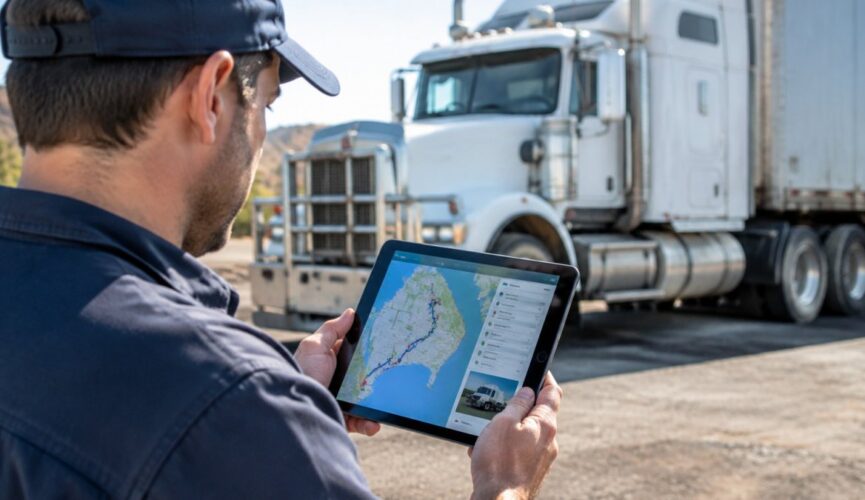
Real-time freight tracking lets you see where a load is at any moment, not just where it was at the last scheduled checkpoint. For a boat, caravan or piece of farm machinery moving interstate, that difference matters. Real-time tracking is the practice of using GPS or telematics data to show a shipment’s live position and status, updated continuously during transit. Australian Government freight and logistics overview
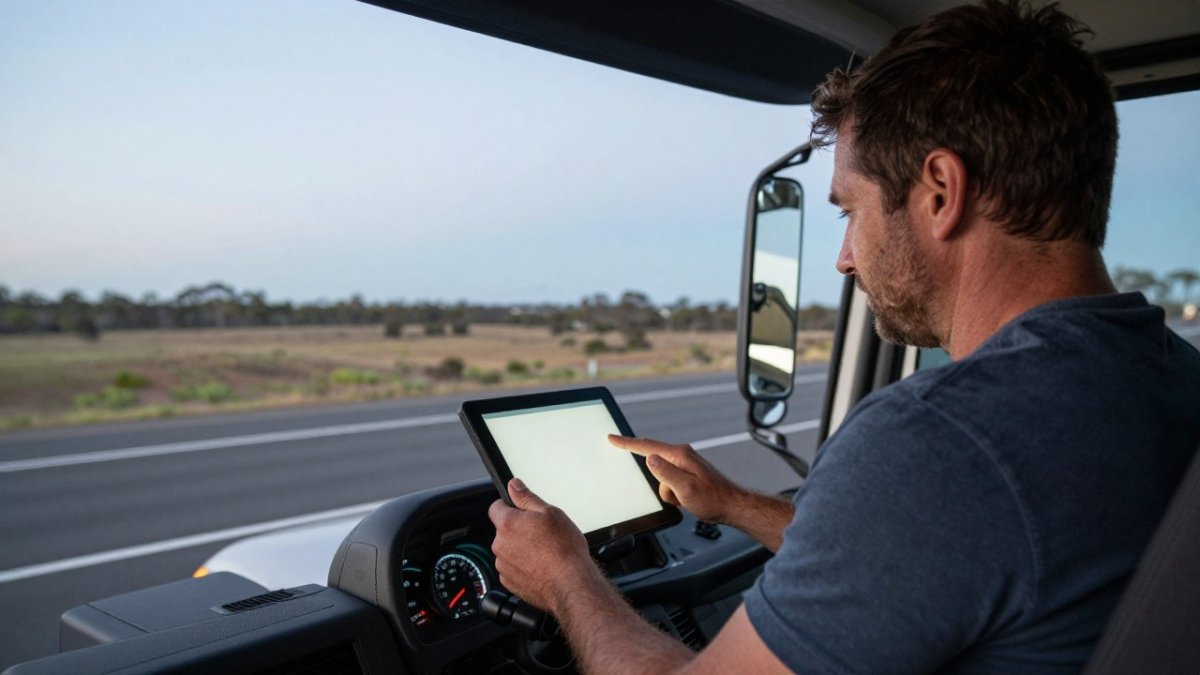
Most tracking systems combine a device on the vehicle or trailer with a platform that displays the data. The device reports location at set intervals, and the platform turns those reports into a live map and status updates. Here’s where it gets practical: the update frequency varies a lot between providers, so ask how often a position is refreshed before you rely on it. Compare heavy transport quotes fairly to see how tracking claims stack up against other providers’ quotes.
!Truck driver checking a tablet in a transport truck cab on an open highway at dusk
GPS Tracking for Freight: What Data You Actually Get
GPS tracking gives you location, but location alone won’t tell you whether the load is safe or on schedule. Heavy equipment transport insurance explains how cover applies to equipment while it is in transit. Look for estimated arrival times, stop history and alerts for unplanned delays. If a provider can’t show these, the tracking is only a dot on a map.
A common mistake is assuming a tracking link guarantees accurate arrival times. Coverage gaps in remote regions can leave the data stale, so plan around those gaps rather than trusting every ping.
Booking Freight Tracking for Your Next Interstate Move
When you book, confirm that tracking is included in the quote, not sold as an extra. Ask for the update frequency and who receives alerts. Load Up’s interstate service runs weekly routes between Darwin, Perth, Adelaide, Brisbane and Melbourne. For current pricing, get in touch with Load Up for a quote, since prices depend on the load and dates.
Before you hire any transport company, it helps to know what to ask. Five questions to ask caravan transport companies covers the points that matter most for tracked interstate freight.
Get in touch to make a booking or arrange a quote with Load Up.
Frequently Asked Questions
How does real-time freight tracking work?
Real-time freight tracking uses GPS or telematics to show a load’s location and status during transit. Accuracy depends on signal coverage, which can drop in remote parts of Australia.
Can heavy haulage and oversized freight be tracked in real time?
Yes, most heavy haulage loads can be tracked, though it usually relies on a GPS unit fitted to the prime mover or trailer rather than to the cargo itself. Pricing depends on the route, load size and dates, so request a quote from Load Up for current rates.
What should I do if my freight tracking has not updated?
First check whether the update gap matches a planned stop, a rest break or a remote area with poor mobile coverage. If the gap is unexplained, contact the transport team to ask for the load’s last known location.

