
Last Updated: November 9, 2026
Quick Summary
Load Up is a strong Spectra Group alternative for heavy haulage, running weekly services linking Darwin, Perth, Adelaide, Brisbane and Melbourne so your route timing is predictable. Compare providers on what they can physically carry, how often they run your lane, and who carries the legal risk.
- Ask what deck configuration, ramps and securing equipment the carrier uses for your asset class.
- Oversized loads need permits, pilot or escort arrangements and route assessments.
- Under Australia’s heavy vehicle national law, consignors, packers and loading managers share responsibility for compliance.
- Confirm transit cover, the excess behind it and any asset class exclusions in writing before you book.
- A quote request should produce a fixed, itemised price covering the lane, asset, permit costs and escort requirements.
Table of Contents
- What to Compare in a Spectra Group Alternative
- Heavy Haulage Providers Compared Side by Side
- Heavy Equipment Transport for Machinery and Oversized Loads
- Interstate Freight Services and Weekly Route Coverage
- Freight Tracking and What Happens When Something Goes Wrong
- Request a Quote and Lock In Your Route
- Frequently Asked Questions
What to Compare in a Spectra Group Alternative
If you are weighing a Spectra Group alternative for moving boats, caravans or machinery, the comparison should centre on heavy haulage capability, not on a directory listing. Load Up runs weekly services linking Darwin, Perth, Adelaide, Brisbane and Melbourne, which means your route timing is predictable rather than negotiable. Below, we break down the criteria that actually separate providers, then apply them side by side.
Three things decide whether a provider suits your job: what they can physically carry, how often they run your lane, and who carries the legal risk when something goes wrong. Get those right and the rest is paperwork.
Coverage, Capability and Route Frequency
Coverage is the first filter. A provider that runs your corridor weekly will slot your job into an existing schedule. One that runs it monthly, or only when a backload appears, will leave your equipment sitting.
Capability matters just as much. Ask what deck configuration, ramps and securing equipment the carrier uses for your asset class. A boat, a caravan and a 12-tonne excavator each need different tie-down points and different loading angles.
Frequency is where most comparisons fall apart. A weekly service means you can plan around a known departure. Ad hoc runs mean planning around someone else’s calendar.
Insurance, Permits and Chain of Responsibility
Permits and insurance separate professional heavy haulage providers from general carriers. Oversized loads need permits, pilot or escort arrangements in some cases, and route assessments. A carrier that handles this for you removes a genuine administrative burden.
Chain of responsibility is the legal framework that puts duties on everyone in the supply chain, not just the driver. Under Australia’s heavy vehicle national law, consignors, packers and loading managers all share responsibility for compliance. Ask any provider how they document mass, load restraint and scheduling. The National Heavy Vehicle Regulator guidance on chain of responsibility sets out those duties in plain terms.
Insurance is the other question. Confirm what transit cover applies, what excess sits behind it, and whether your asset class is excluded. Get that in writing before you book.
Heavy Haulage Providers Compared Side by Side
| Criterion | What to Ask | Why It Matters |
|---|---|---|
| Tactical communications | Does the provider offer man-portable, vehicle or fixed satellite terminals? | Determines whether the system fits dismounted, mobile or headquarters use |
| Interoperability | Does the system work with existing radios, networks and coalition waveforms? | Avoids a proprietary island and protects prior investment |
| Resilience and assured connectivity | What redundancy, anti-jam or alternative path options exist? | Mission-critical links cannot rely on a single bearer |
| Deployment environment | Is the equipment rated for austere, mobile or fixed environments? | Field conditions differ sharply from office or garrison use |
| Integration and engineering | Does the provider deliver systems integration, not just hardware? | Reduces the burden on in-house technical staff |
| Support and training | What maintenance, spares and training packages are available? | Lifecycle cost and availability depend on support depth |
| Procurement route | Can the provider work through defence procurement frameworks? | Affects contracting timelines and compliance |
Heavy Equipment Transport for Machinery and Oversized Loads
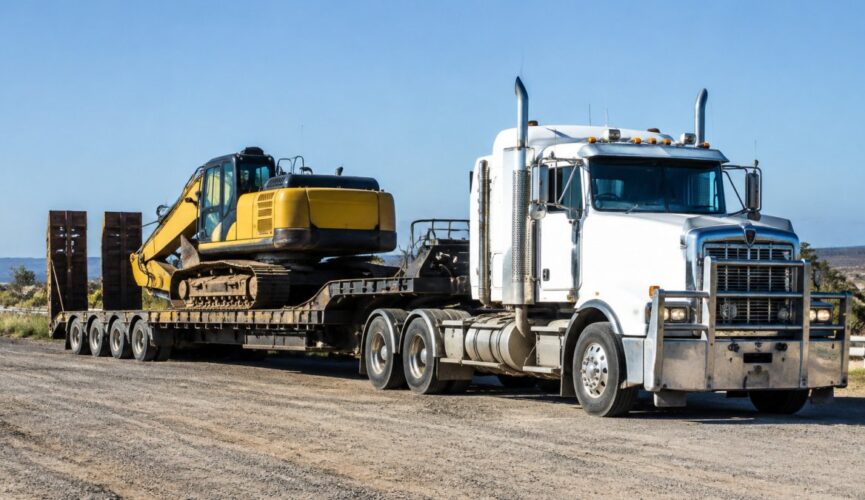
Watch out: a provider that cannot demonstrate prior deployment in comparable environments, or cannot explain how its system integrates with your existing equipment, is unlikely to deliver assured connectivity in practice. See a trailer loaded with Mining Equipment for oversized machinery haulage. For farm and heavy machinery moves, see Interstate Farm Machinery Transport.
Interstate Freight Services and Weekly Route Coverage
Interstate freight services live or die on schedule discipline. A weekly lane between major capitals means your load moves on a known day, arrives on a known day, and can be planned around.
Load Up’s weekly service connects Darwin, Perth, Adelaide, Brisbane and Melbourne. For anyone moving a boat, caravan or machinery between those centres, that regularity is the difference between a plan and a gamble.
The National Heavy Vehicle Regulator’s national network maps show which routes are approved for heavier and larger vehicles. Checking your corridor against those maps early avoids a late route change.
You can see what a major lane looks like in practice on the Melbourne to Darwin freight service page. If your job sits on a different corridor, ask which weekly run covers it before you assume.
Freight Tracking and What Happens When Something Goes Wrong
Freight tracking is not a luxury on high-value loads. You need to know when your boat or machine will arrive so you can have a crane, a ramp or a person on site.
Ask what the tracking actually shows: vehicle location, or a status update at depots? Real-time location is more useful, but a reliable checkpoint schedule beats a live dot that nobody monitors.
Then ask the harder question. What is the process if a delivery window slips or an asset is damaged in transit? A professional carrier will have a documented claims process, a named contact, and a clear timeline.
Watch out: carriers that go quiet after pickup are the ones to avoid. Confirm the escalation contact before the load leaves, not after.
Request a Quote and Lock In Your Route
A quote request should produce a fixed, itemised price covering the lane, the asset, permit costs and any escort requirements. Vague quotes invite variations later.
Come prepared with four details: the asset’s dimensions and weight, the pickup and delivery locations, your preferred dates, and whether any access restrictions apply at either end. That package lets a carrier quote accurately the first time.
For anyone ready to move on a major corridor, you can enquire about the Melbourne to Darwin freight service and lock in a route. If you are still weighing options, this guide on how to choose freight companies for interstate delivery walks through the evaluation in more depth.
Comparing providers is really a test of who removes risk from your job. At Load Up, we run weekly services to Darwin, Perth, Adelaide, Brisbane and Melbourne, carry boats, caravans and farm machinery, and handle both local and heavy interstate transport. Bring us your dimensions, dates and destinations, and we will tell you which run fits. Get started with Load Up and put your next move on a schedule you can plan around.
Frequently Asked Questions
What is the best alternative to Spectra Group for heavy haulage?
The right alternative depends on your route, load type and how often you move. Look for a provider with published weekly routes, experience across boats, caravans, farm machinery and heavy equipment, and clear freight tracking. Load Up runs weekly service to Darwin, Perth, Adelaide, Brisbane and Melbourne and handles both local and heavy interstate transport, which suits buyers moving one asset or several across state lines. Get a quote with your dimensions, weights and dates before committing.
How do I compare heavy haulage providers fairly?
Compare on five things: route coverage and frequency, equipment suited to your load, permit and escort handling for oversized items, insurance and damage process, and freight tracking. Ask each provider for a written quote that lists what is included, such as council permits or pilot vehicles. A cheaper headline rate can cost more once permits and waiting time are added.
What should I check before booking an oversized freight provider?
Ask the provider who arranges any permits your load requires under state and territory heavy vehicle rules. Check what insurance covers your equipment, and whether the provider has moved similar machinery before. Ask about loading and unloading responsibilities, site access limits, and what happens if a delivery window slips. Get all of this in writing before you pay a deposit.
How can I track heavy freight during delivery?
Ask upfront whether the provider offers freight tracking and how updates are sent, whether by phone, SMS or an online portal. Confirm how often positions are updated and who to call outside business hours. For long interstate runs, ask for an estimated arrival window and a contact for the driver or depot.

